
Wired Different: When Your Gift Looks Like a Problem
I spent years softening my questions for someone who experienced my curiosity as a threat.
Not occasionally. Not in moments of high tension. Consistently, in a friendship I'd had for years, I learned to pre-explain my intentions before I asked anything. To edit myself before I spoke. To brace for the defensiveness I knew was coming even when I was just genuinely curious. Even when the question had nothing to do with her and everything to do with how my mind works.
And for a long time I thought that meant something was wrong with me.
That's the part I want to talk about. Not the friendship. Not the ending. But that specific kind of slow erosion that happens when something that is fundamentally you keeps getting received as an attack.
The thing is, I learned to do this long before that friendship existed.
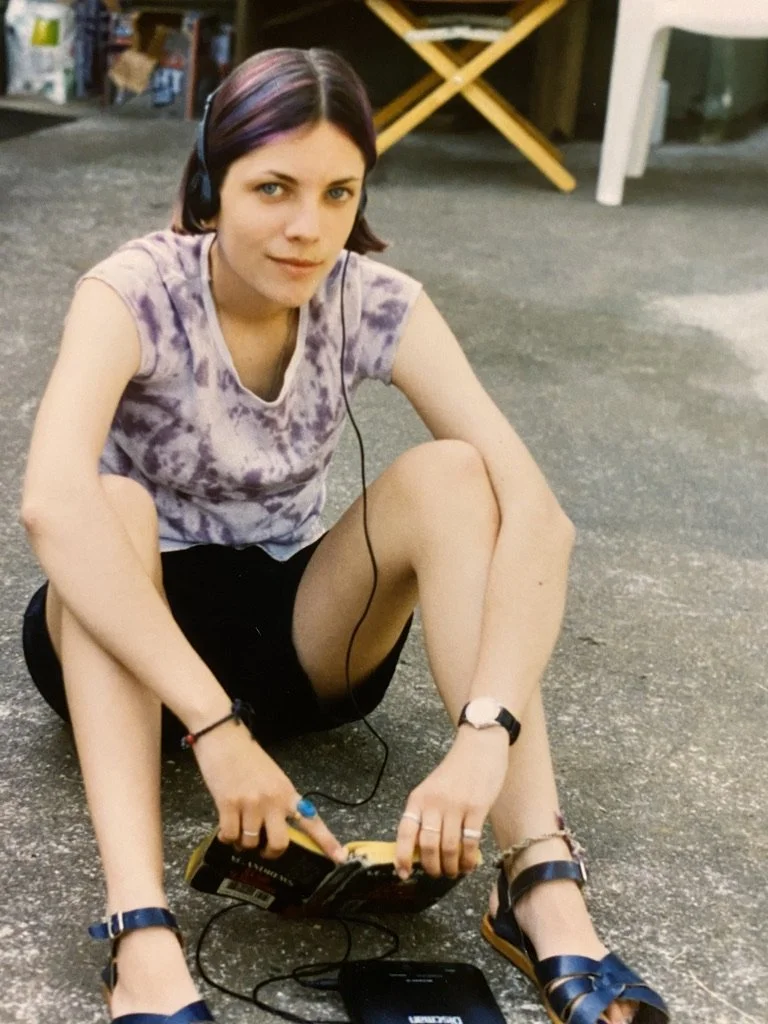
As a teenager I absorbed a very clear message: who I was, as I was, was not entirely acceptable. There was abandonment woven into some of my closest relationships back then, friendships and family both, and I did what most of us do when we're young and we need to belong somewhere. I adapted. I made myself into the version of me that fit. I got so good at it that I stopped noticing I was doing it.
And then I carried it into adulthood. Into every relationship where my natural way of being made someone else uncomfortable. Into every friendship where I learned, slowly and quietly, to take up less space.
Until it all blew up over tofu and feta.
It's always the small thing, isn't it? The last straw is never actually about the tofu. It's about every single time before that when you swallowed the question, softened the ask, pre-explained your intentions so someone else could stay comfortable. The tofu just had the bad luck of showing up last.
Here's what I know about myself
I question everything.
Not as a judgment. Not as a challenge to someone's authority or expertise. I question because that's genuinely how my mind moves through the world. I want to know where things come from. How they hold up. Why we do them the way we do. I apply this to systems, to processes, to ideas, to myself. Especially to myself. This isn't something I do to people. It's just how I think.
In Human Design, I have the channel 63-4, which runs from the Head center to the Ajna. It's a logical channel and its entire function is pressure testing. Questioning what holds up under scrutiny. Poking at things until what's solid reveals itself as solid and what isn't falls away.
It's not personal. It's not an indictment. It's just the mechanism.
But here's what I didn't see for a long time. That mechanism, when it lands on someone who needs their knowing to feel unquestioned, feels like an attack. Not because it is one. Because they experience it that way.
And if you're not careful, you start to believe them.
The Phoebe problem
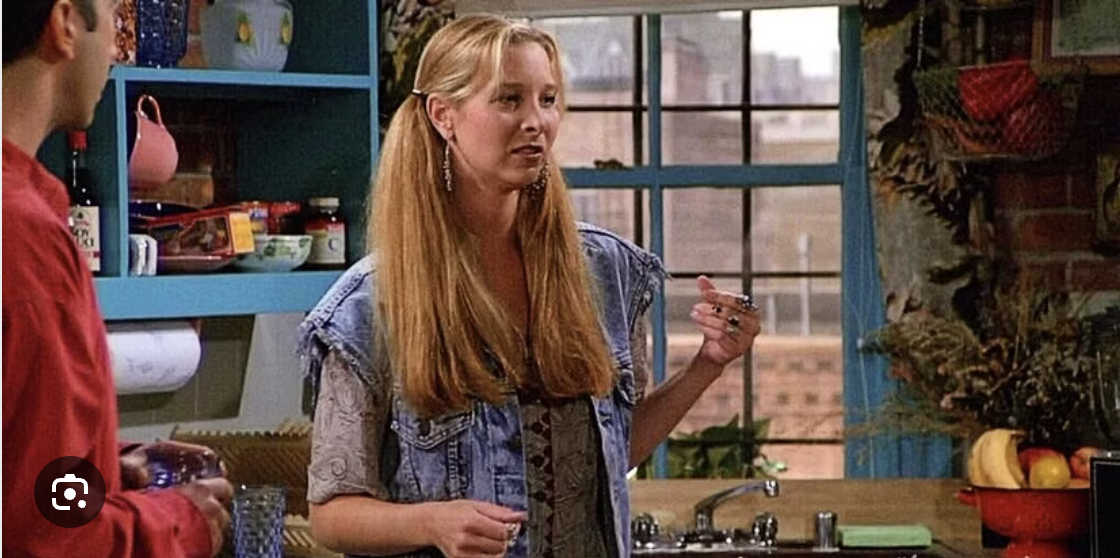
There's something I've noticed about the parts of us that are most essentially us. The parts that are genuinely wired in, doing exactly what they're supposed to do. Those are almost always the parts that get the most friction.
Not because they're wrong. Because they're strong.
If you've ever watched Friends, you know Phoebe. Everybody loves Phoebe. She's quirky and fun and everyone wants to be around her. But nobody really wants to get in the weeds with Phoebe. Nobody sits down and says tell me who you actually are and let me hold all of it. She's a novelty. Something to talk about. Not someone to really know.
I have felt like Phoebe more times than I can count.
And maybe you have too. Because we all carry something that the people around us experience very differently than we do. Something we know as neutral or even loving that lands as too much, too intense, too direct, too curious, too whatever.
That gap between how we experience ourselves and how we're received is not evidence that we're wrong. It's information about fit.
The thing that gets you judged is the thing your people need you for
What I've come to understand, partly through Human Design and partly through just living long enough to see the pattern, is that the things in our design that create the most friction are also the things our actual people need us for most.
My questioning, my pressure testing, my refusal to just accept something because someone said so. That's exactly why people come to me for Human Design work. They're in the liminal space between who they were and who they're becoming, and they need someone who isn't going to rush them or throw water on the fire or hand them a pretty reframe before they've actually sat in the thing.
They need someone who will stay in it with them. Who will keep asking the question until what's real reveals itself.
The same thing that made one person feel constantly questioned is what makes my clients feel genuinely seen.
That's not a coincidence. That's design.
On letting things complete

Gate 42 appears in my chart twice. It's the gate of completion, of endings, of being okay in the liminal space between what was and what's next. I have spent a significant portion of my life trying to force things to continue past their natural end. Out of loyalty. Out of fear. Out of not wanting to be the one who walked away.
But there is real energy that comes back to you when you let something complete. When you stop holding a shape that stopped fitting a long time ago.
This friendship completing wasn't a failure. It was the gate doing what it does.
I'm no longer willing to make myself smaller to make other people feel more comfortable. I don't want to hurt anyone. That is never my intention. But I'm also not willing to fit myself into whatever box somebody else deems acceptable for me anymore.
What I want to leave you with
There is something in your chart, I'd bet on it, that you have experienced as a problem. Something that keeps coming up in your relationships. Something you've been told is too much or not enough or just wrong somehow. Something you've adjusted yourself around for so long that you've almost forgotten it was ever natural.
It's probably one of your greatest gifts.
Not in a "everything happens for a reason" way. In the literal, structural, this is what you are here to do way.
When you can see it in your chart it doesn't make the friction disappear. But it gives you a different relationship to it. Instead of something you're ashamed of it becomes something you're learning to wield. Instead of a verdict it becomes curriculum.
And when you stop apologizing for it, the right people show up. The ones who don't need you to be smaller. The ones who came specifically because of the thing you almost edited out.
Those are your people.
If something in this resonated and you're curious what that thing is in your chart, I do Human Design Oracle Readings. One hour where you bring a situation, a pattern, something you keep bumping into, and we look at it together. Not to fix you. To show you what's actually there. Find the link below or reach out and ask.
I also recorded a podcast episode where I talk through all of this in real time if you want to hear me process it out loud. That link is below too.
