
She Cut Up the Jeans Like It Was Nothing
The thing you've been hiding isn't what's holding you back. The hiding is.
I was eight years old the first time I got caught.
My parents were in the middle of a divorce and we were at Bi-Mart and it was Christmas and I remember standing there looking at a pack of Mr. Sketch scented markers and a sewing kit and making a decision I knew was wrong even as I was making it. I loved art supplies. I wanted to own a stationery store someday. And something in me, compulsive and desperate and unable to stop itself, stuffed both of them into my tiny little purse until it was busting at the seams, and walked out of the store.
Thanks for reading! Subscribe for free to receive new posts and support my work.
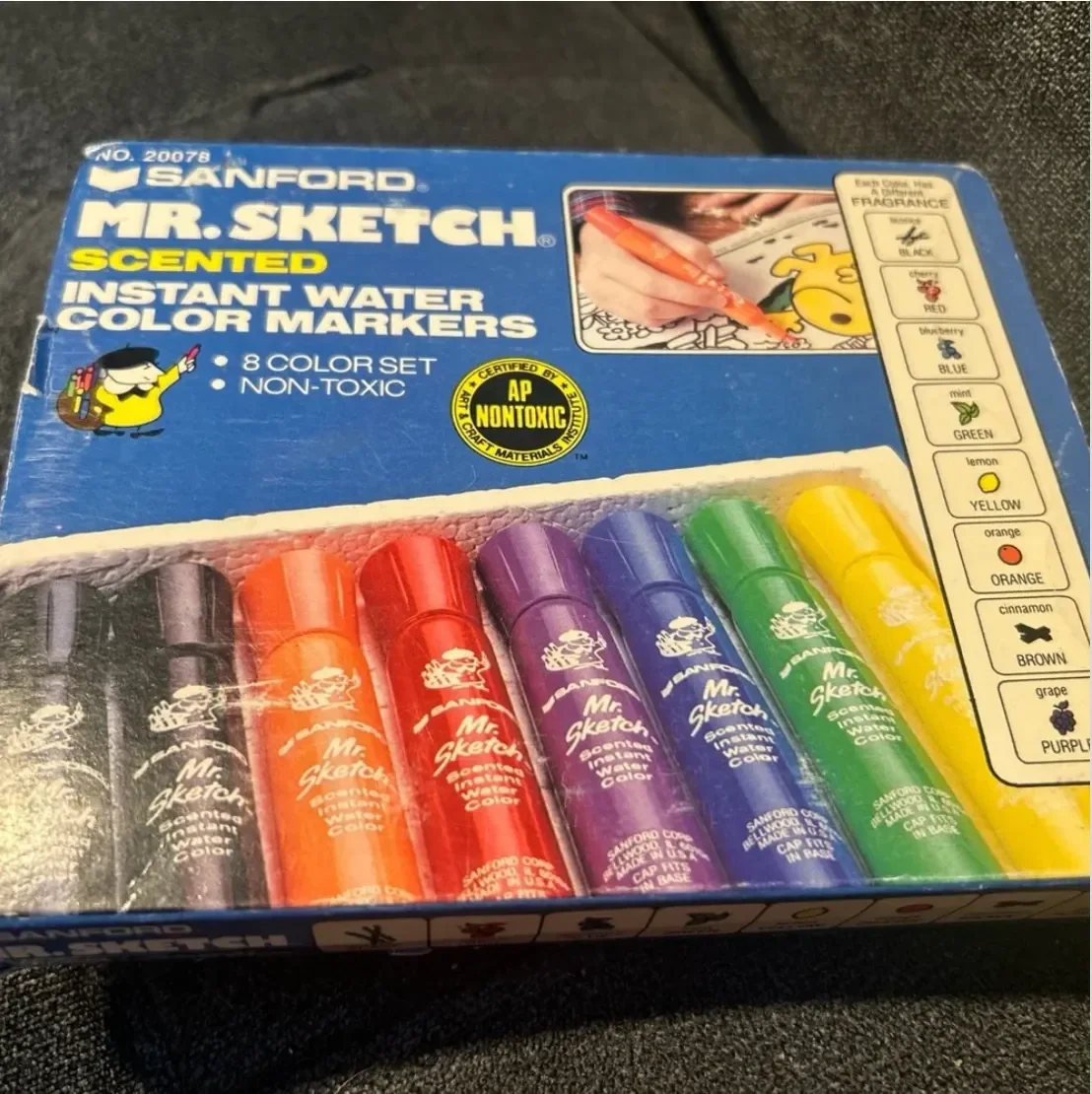
This is just like the box I shoved in my eight year old self’s tiny kid purse.
I don’t know if part of me wanted to get caught. I just know I couldn’t not do it. I wanted something that made me feel special when nothing felt special anymore.
I don’t think we even made it to the car. My mom walked me back into the store right then. The manager looked at me with the kind of gravity that made my stomach drop and told me that because it was Christmas and because I was eight, he wasn’t going to call the police.
He scared the hell out of me. He was supposed to.
What I couldn’t have told you then was why I did it. I just knew I wanted something and I took it. What I understand now is that I was a kid whose world had just cracked open, who had just lost the life she knew, and who was trying in the most eight year old way possible to get her hands on something that felt like having.
Because I knew what having felt like. That’s the part of this story that matters.
We didn’t start out without. My earliest years were in a trailer park but by the time I was six we had moved to a real neighborhood, rented a house, and then my parents had a house built. It was the nicest place we had ever lived. It felt stable and normal and like we were people who had things. And then my parents divorced and all of it evaporated and we moved. And then moved again. Eighteen times in twelve years, in the same town, because the financial circumstances kept shifting. Sometimes we lived with my grandparents. My dad didn’t pay child support. Name brand anything became a luxury we didn’t have.
I wasn’t just growing up without. I was growing up knowing exactly what I was missing because I had already had a version of it. And I didn’t want anyone to know how far the distance was between the life I was living and the one I had already tasted.
So I got careful. Careful about what I let people see, though I’m sure they saw anyway. I’ve never been great at hiding my feelings.
Then came sixth grade and Tiffany.
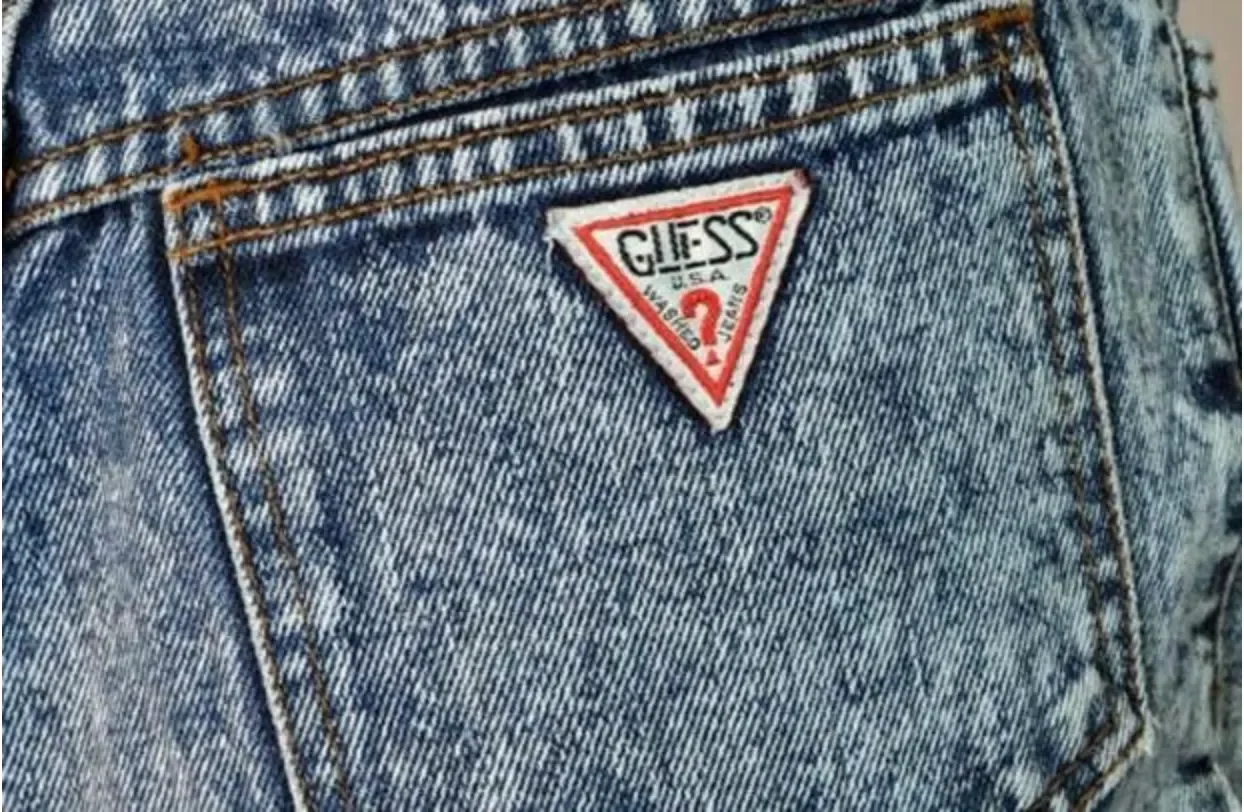
She was one of the cool new kids, the kind with a pool in her backyard and acid wash Guess jeans that made everything she wore look intentional. This was 1990 and Guess was everywhere and I wanted a pair so badly it felt like a physical ache. Not because I particularly cared about denim. Because Tiffany had them and Tiffany was everything I wanted to look like from the outside and those jeans felt like a membership card to a club I wasn’t sure I was allowed to join.
These were the jeans. This exact color and that little patch was everything.
My aunt worked in the kids department at Meier & Frank. She had an employee discount and she had apparently been paying attention, because that Christmas I unwrapped a pair of acid wash Guess jeans and I thought my heart might actually leave my body. I wore them almost every day. I took care of them the way you take care of something that cost more than it should have. I wouldn’t lend them to anyone because I knew nobody else had the same relationship to what they represented.
Then one spring day Tiffany took her Guess jeans, the ones I had coveted before I had my own, and cut them into shorts. Just like that. Scissors to something that had meant everything to me, like it was nothing to her.
I remember the feeling. Not anger exactly. Something closer to vertigo. Because in that moment I understood something I didn’t have words for yet: what meant everything to me meant nothing to her. And that gap between her casualness and my reverence felt like something she could see. Like I had accidentally shown her something about where I came from that I hadn’t meant to reveal.
That’s the thing about shame that lives in circumstances you didn’t choose. It doesn’t announce itself. It just makes you careful.
Here’s what I want to say about shame though, because I think we get this wrong.
We tend to think shame belongs to scarcity. That it’s the territory of people who grew up without enough, who moved too many times, who wore the wrong jeans or no jeans or borrowed jeans. But shame has no income requirement. It lives just as comfortably in families where the money was always there but nobody talked about it, where appearances were everything and cracks in the facade were papered over fast, where having too much felt like something to hide from people who didn’t, where the pressure to maintain a certain image was its own kind of prison.
The flavor is different. The grip is the same.
What shame is really about, regardless of which end of the spectrum you grew up on, is the fear of being seen as less than. Less stable. Less worthy. Less together than you are pretending to be. And the strategy most of us develop in response is the same: hide the parts that might give you away. Edit yourself for safety. Show the version that won’t invite judgment.
And that strategy follows you. It followed me for a long time.
It follows a lot of us straight into our businesses.
If you are building something where you are the brand, where your name and your face and your story are what people are actually buying into, the parts of yourself you are hiding are costing you. Not because people need your trauma. Not because vulnerability is a marketing strategy. But because the version of you that has been carefully edited for safety is smaller than who you actually are. And people can feel the editing even when they can’t name it.
They feel the careful. They feel the managed distance. And they keep their own careful distance in return.
The things you are most afraid someone might find out, the where you came from, the what happened to you, the who you used to be, the thing you did or didn’t do or had done to you, those things lose almost all of their power the moment you speak them in your own voice. Not because saying them out loud fixes anything. But because shame lives in secrecy. It needs the dark. When you take your story back, when you say this is where I came from, this is what happened, this is part of who I am, you stop being someone who can be exposed. You become someone who has already told the truth.
There is nothing left to use against you.
Now I want to be clear about something. I am not saying you owe anyone your story. I am not saying that anyone who has been through something hard should feel pressure to perform their pain for an audience. You don’t. Your story belongs to you. You get to decide what you share, when you share it, how much you share, and with whom. Nobody gets to rush that. Not me, not anyone.
But when you are ready, if you are ready, something shifts when you stop hiding a part of yourself and just own it.
I grew up in a house my parents had built and then lost in a divorce. I moved eighteen times in twelve years. I got hand me downs from my grandmother’s boss’s kids. I stole scented markers from Bi-Mart when I was eight because my world had cracked open and I needed to have something. I cherished a pair of Guess jeans like they were sacred because to me they were.
That’s part of my story. It’s not all of my story. It doesn’t define me. But it made me someone who understands value, who doesn’t take things for granted, who pays attention to what things actually cost and what they actually mean. The kid who was horrified watching Tiffany take scissors to something precious wasn’t wrong about anything. She just didn’t know yet that the reverence she had for those jeans was a preview of who she was going to become.
Your stories make up who you are, but they don’t define you.
A couple of health scares have a way of burning certain things into clarity fast. Stuff is just stuff. You can lose things and gain things and none of it is the point. What you can’t replace is the life you are living right now and the authenticity you are either bringing or withholding.
Those Guess jeans mean nothing if you are not showing up as who you actually are.
You are the only person who has lived your exact life. But your life is made up of thousands of micro experiences that other people have lived versions of too. The losing what you had. The wanting to belong. The carefully maintained thing that someone else treated as disposable. The moment you realized the gap between where you were and where you wanted people to think you were.
Someone out there needs the version of that story that only you can tell.
Own it. Not for them. For you.
You’ve been managing that story for years. Deciding who gets to know. Monitoring what you let slip. Carrying it carefully so nobody sees the shape of it under your coat.
That’s exhausting. And it’s keeping you smaller than you are.
So here’s what I want you to do. Write down the five things you have hidden the longest. The ones that still have a grip on you. The ones you’ve never said out loud or only whispered to one person in the dark.
Then ask yourself what would be possible if that story no longer owned you.
You already know the answer.
The only question left is whether you’re ready to stop letting it run the show.
